 Chimney primeChimney prime
A Cleaner, Safer Fire.
A chimney sweep in St. Louis, MO cleans creosote and debris from your flue, checks the liner and firebox, and confirms the whole system vents safely before you light the first fire of the season. Whether you searched for a chimney sweep near me for a smoky Tower Grove South fireplace or an annual cleaning on a century-old Compton Heights home, we handle the dirty, careful work and leave the hearth swept clean. Bring us the whole picture — a photo of your firebox and flue tells us more than a phone description ever will, so text one over before we even get in the truck.
Call (314) 207-3281
Tell us about your chimney sweep job — we'll get you a fast quote.
A firm, all-in price confirmed before we start — no surprises.
On time, done to standard, and tidy when we leave.
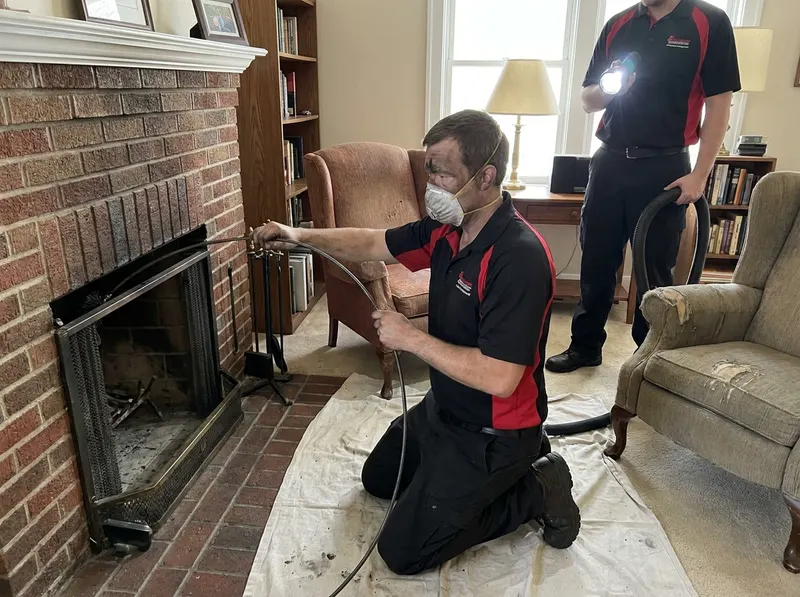
We remove creosote and soot buildup from the flue and firebox using rods, brushes and a HEPA vacuum, then leave the hearth swept clean and the room the way we found it. Regular sweeping matters most for anyone burning seasoned wood all winter, since creosote is the flammable fuel behind chimney fires — it forms fastest when wood burns cool or wet, and it builds in the smoke shelf and upper flue where you'll never see it from the firebox. We drop-cloth the surrounding floor, seal the opening so soot doesn't drift into the living room, and carry gear in and out without scuffing your walls or stairs, which matters in the narrow entries of a lot of St. Louis rowhomes. When we're done you get a straight read on how heavy the buildup was and whether your burning habits need a tweak.
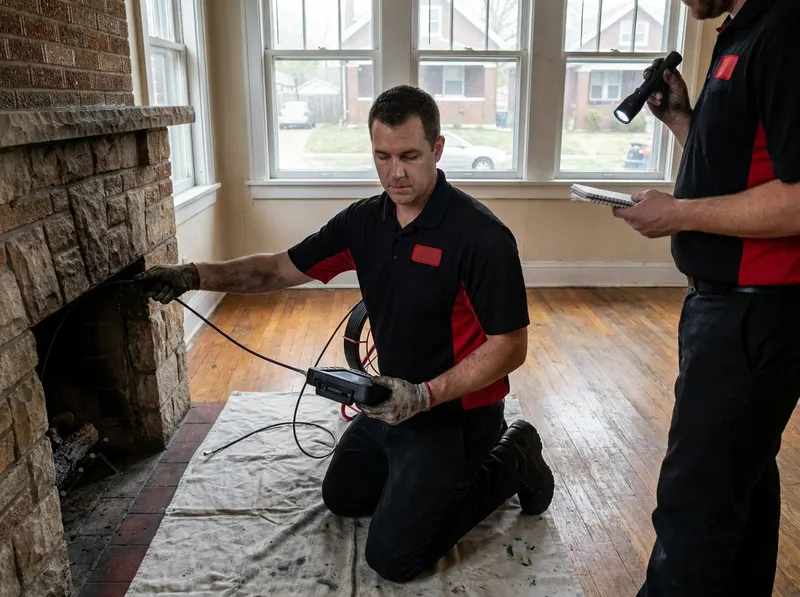
A Level 1 inspection covers the readily accessible parts of your chimney and venting for a system in normal use — firebox, damper, visible flue and the connections that tie it all together. A Level 2 adds a video-camera scan of the entire flue interior and accessible attic, basement or crawlspace runs, and it's the standard after a home sale, a fuel or appliance change, or a suspected chimney fire. The camera is what separates a guess from a diagnosis: on a shared-wall flue you often can't see the damage that matters without sending a lens all the way up. You get a plain-English report of what we found — cracked tile, gaps at a joint, a rusted-through liner, or simply a clean bill — not a sales pitch. If everything checks out, we tell you that.
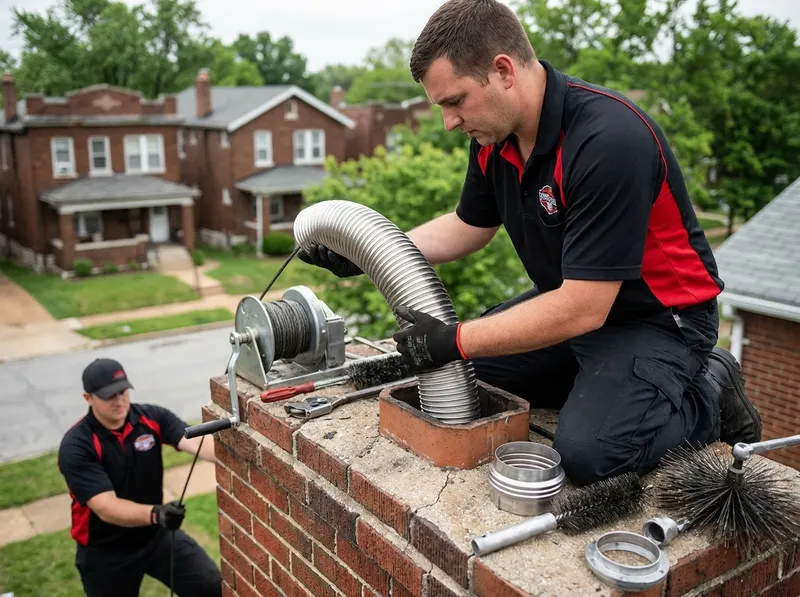
When clay tiles crack or the flue no longer matches the appliance, a stainless-steel liner restores a safe, correctly-sized path for smoke and gases. Relining matters when you've switched to a gas insert or high-efficiency appliance, because an oversized old flue lets condensation and acidic gases sit against the masonry and slowly eat it from the inside — a problem you can't see until the mortar starts crumbling into the smoke shelf. It also matters after a chimney fire, which can crack tile liners in a single event. We size the liner to your specific appliance, insulate it where the code and the flue call for it, and confirm the draft afterward so the unit pulls cleanly instead of spilling exhaust into the room.
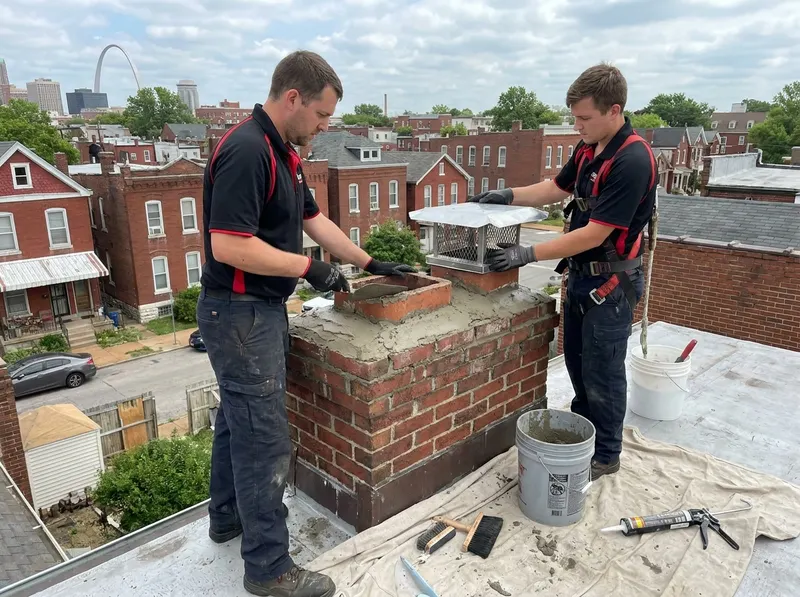
We repair spalling crowns, re-point loose mortar joints and install or replace chimney caps and spark screens. This work matters most on St. Louis's older brick chimneys, where decades of freeze-thaw cycles open hairline cracks that pull water into the structure, freeze, and pry the masonry apart a little more each winter. The crown — the concrete slab at the very top — is the first line of defense, and once it cracks, water runs straight down into the flue and the brick. A proper cap keeps rain, leaves, birds and the occasional squirrel out of your flue, and a spark screen keeps embers off a shingle roof. Catching this early is almost always the difference between a small repair and a partial rebuild.
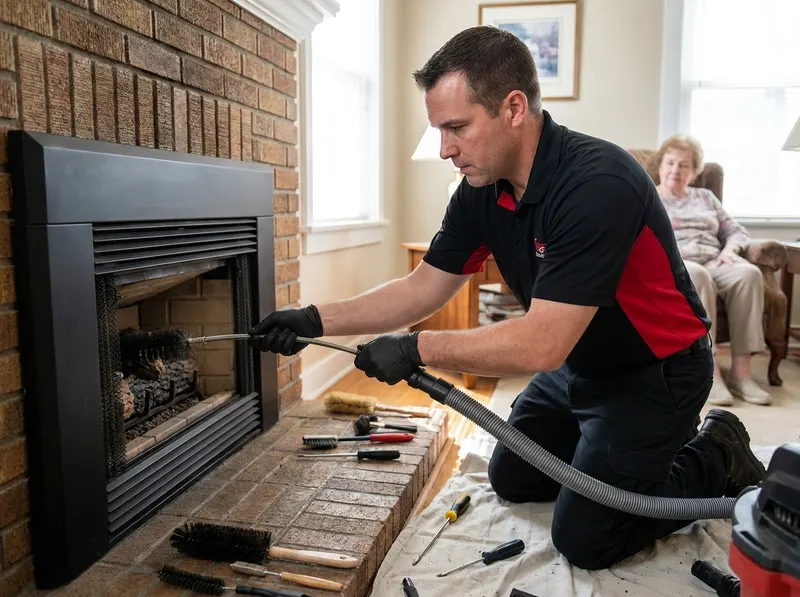
For gas logs and inserts we clean the firebox, check the venting and look over the visible components so the unit lights and burns clean. This suits homeowners who rarely open the damper and assume gas needs no care — but vents still clog with debris and spider webs, glass fronts fog with soot, and log placement drifts out of spec and starts producing carbon. We clear the burner ports, dust the logs and media, wipe the glass, and confirm the venting isn't blocked. We work within our scope and flag anything that needs a licensed gas technician rather than guessing at gas lines or valves we're not the right hands for.
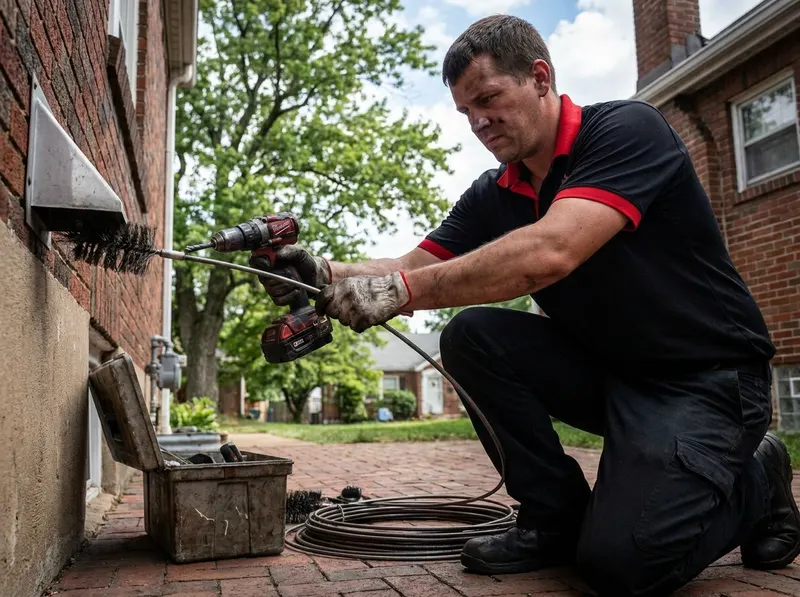
We clear lint buildup from dryer vent runs, a common cause of slow drying and a real fire risk in tightly-built rowhomes and multi-family buildings where the vent may travel a long way before it reaches the exterior wall. Vent cleaning matters most when your run is long or turns several times, because every bend catches lint the dryer can't push through. Signs you're overdue: clothes coming out damp after a full cycle, the laundry room getting hot and humid, or a burning smell when the dryer runs. We clear the full run, check the exterior flap, and confirm strong airflow at the outside vent when we're done.
The right service depends on what your chimney is actually doing, and the honest job is matching the work to the flue rather than upselling every home into a reline. If you burn wood a few times a winter and just want peace of mind before the season, choose a standard sweep and Level 1 inspection — it clears creosote and confirms the visible flue and connections are sound, and for most homeowners that's the whole job. If you've had a chimney fire, changed appliances or fuel, bought the house, or something looks off — smoke pushing back into the room, a smell that won't clear, staining on the ceiling near the chimney chase — choose a Level 2 inspection: it adds a video-camera scan of the full flue interior and any accessible attic or crawlspace runs. The trade-off is more time and cost for a much clearer picture of hidden damage, and on the older brick flues that fill St. Louis City that picture is usually worth having. If the sweep or camera turns up a cracked clay tile or a flue that no longer matches your appliance, choose relining over patching; a stainless liner restores a safe, correctly-sized path for smoke and gases, where a cosmetic patch leaves the real problem behind and often fails within a season or two. And if the trouble is up top — a spalling crown, loose crown wash, or a missing cap letting rain and squirrels in — choose the masonry and cap work; skipping it is what quietly turns a $300 crown repair into a four-figure rebuild over a few St. Louis freeze-thaw winters. The other common fork is scope of cleaning: if you only run gas logs, a firebox-and-vent cleaning is enough and costs far less than a full wood-flue sweep; if you burn wood hard all winter, the full sweep with a HEPA vacuum is the one that actually protects you. When you're unsure which you need, book the sweep and inspection first and let what we find — not a guess over the phone — drive the rest.
| On-site minimum (any single service call) | from $150 |
| Standard chimney sweep + Level 1 inspection | $150–$275 |
| Additional flue swept, same visit | From $150 |
| Level 2 inspection with video camera scan | $225–$450 |
| Real-estate / pre-sale inspection with report | $225–$450 |
| Chimney cap supply & install | $150–$400 |
| Multi-flue or custom cap | $400–$900 |
| Crown repair / crown wash | $300–$900 |
| Masonry re-pointing (accessible) | $400–$1,500+ |
| Full crown rebuild | $800–$2,500+ |
| Stainless steel flue relining | $1,800–$4,500+ |
| Smoke chamber parging | $500–$1,200 |
| Gas fireplace / insert cleaning | $150–$300 |
| Dryer vent cleaning | $150–$275 |
| Animal / nest removal from flue | $150–$350 |
Your exact price is confirmed before any work begins.
St. Louis City has one of the densest stocks of pre-1920 brick chimneys in the Midwest — the tall, shared-wall flues you see across Soulard, Lafayette Square, Benton Park and Compton Heights were built for coal and wood, and many still carry clay tile liners that never expected a modern gas insert. Add the region's hard freeze-thaw swings, the wet whiplash between a humid Missouri Botanical Garden summer and a bone-dry January cold snap, and old crowns and mortar joints crack faster here than in newer suburban builds. The brick itself is often soft, locally-fired stock that spalls once water gets behind the face, so a missing cap or a cracked crown does damage quickly. On the grand old homes near Tower Grove Park, Compton Heights and the Central West End we still see original flues that have been reused for three different appliances across a century, each one a slightly different size than the last. That's why we lead with a camera before we quote a reline: on a 90-year-old flue near Tower Grove Park, what looks like a simple sweep sometimes hides a cracked tile that a cheap patch would only cover up. Because St. Louis City is an independent city, separate from St. Louis County, code and permitting can differ block to block from the suburbs — one more reason we'd rather see the chimney than guess.
Neighborhoods we cover: Soulard, Lafayette Square, Tower Grove South, The Hill, Compton Heights, Central West End, Carondelet, Benton Park, Shaw, Dutchtown.
A standard sweep and Level 1 inspection for a single accessible flue in St. Louis typically runs $150–$275, and $150 is our on-site minimum for any service call. These are honest ballparks — the exact price depends on your flue count, buildup and access, and we confirm it on-site before any work starts. A Level 2 camera inspection, relining or masonry repair is quoted separately after we see the chimney. Text a photo of your firebox and roofline to (314) 207-3281 and we can give you a tighter estimate before we arrive.
Most St. Louis homeowners who burn wood should have the chimney inspected once a year and swept whenever creosote builds up — often annually for regular burners, sooner if you burn nightly or use unseasoned wood. If you rarely light a fire, an annual inspection still matters because moisture, animals and settling brick can create problems even without heavy use. Gas fireplaces should be checked yearly too, since vents and components still need attention even though there's little visible soot.
The busiest stretch is fall, September through November, when everyone in the area prepares fireplaces for winter — book several weeks ahead if you want a pre-season slot. Late winter brings a smaller mid-season rush from folks who've been burning steadily. Spring and summer are the quietest and usually the best window for relining, crown work and masonry repairs, since lead times are shorter and there's no pressure to beat the first cold night.
Yes — we work throughout St. Louis City, including Soulard, Lafayette Square, Tower Grove South, The Hill, Compton Heights, Central West End, Carondelet, Benton Park, Shaw and Dutchtown, plus the areas around Forest Park and Tower Grove Park. St. Louis City is an independent city separate from St. Louis County, so if you're just outside the city line, call (314) 207-3281 with your ZIP and we'll confirm coverage.
A Level 1 inspection in St. Louis covers the readily accessible parts of a chimney that's in normal service — the firebox, visible flue and connections. A Level 2 adds a video-camera scan of the full flue interior and any accessible attic, basement or crawlspace runs, and it's the standard when you buy or sell a home, change fuel or appliances, or suspect a chimney fire. On the older brick flues common across St. Louis, the Level 2 camera is often what turns up a cracked tile a Level 1 would miss.
In St. Louis that smell usually comes down to moisture and pressure. Humid summer air draws through creosote deposits left in an older flue and pushes the odor back into the room, and tightly-sealed homes can pull air down the chimney instead of up. The first step is a sweep to remove the creosote that's holding the smell, then we check the damper seal and cap; sometimes a top-sealing damper or a cap that keeps rain out solves what a sweep alone can't. A camera inspection tells us whether it's just buildup or a liner problem.
Yes — relining older St. Louis brick chimneys is a big part of what we do, because so many pre-1920 flues were built for coal or wood and later reused for gas inserts or high-efficiency furnaces they were never sized for. We size a stainless-steel liner to your specific appliance, insulate it where needed, and confirm the draft afterward. Relining runs roughly $1,800–$4,500+ depending on flue height, access and whether the old tile needs to come out, and we quote it only after a camera inspection shows exactly what's up there.
It's strongly recommended. A Level 2 inspection with a written report is the standard for a St. Louis home sale, because it documents the flue condition for buyers, lenders and inspectors and heads off last-minute renegotiations over a chimney nobody could see inside. On the older brick homes across the city, that camera scan often reveals cracked tile or a liner mismatch that becomes a negotiating point — better to know before the listing than during closing. We provide a plain-English report you can hand to your agent.
For nearly every St. Louis chimney, yes. A cap keeps rain out of the flue — which is what accelerates freeze-thaw damage to the crown and tile — and it blocks birds, squirrels and leaves that can nest in and block the flue. Uncapped flues are a common source of the nesting and water problems we find on the older homes near Tower Grove Park and Compton Heights. Cap supply and install typically runs $150–$400 for a standard single flue, more for multi-flue or custom crowns.
Yes. Birds, squirrels and raccoons regularly get into uncapped or damaged flues around St. Louis, and a nest can block the flue enough to push smoke and carbon monoxide back into the house. We remove accessible nests and debris, sweep the flue, and install a cap and screen so it doesn't happen again — nest removal generally runs $150–$350 depending on access. If we suspect a live animal that needs a licensed wildlife handler, we'll tell you rather than force it.
A standard sweep and Level 1 inspection on a single accessible St. Louis flue usually takes about an hour. Add a Level 2 camera scan and it runs closer to 90 minutes to two hours, depending on flue height and how many runs we're scanning. Masonry repairs, cap installs and relining are separate visits scheduled after we've quoted the work — we don't rush those to fit a same-day slot.